
Cold Chain Visibility: How Temperature-Sensitive Medicines Stay Safe In Transit
Key Takeaways
- Cold chain logistics protect medicines that can lose quality when exposed to heat, freezing conditions, or prolonged delays.
- Visibility tools combine location, temperature, timing, and handling data to help teams identify risks sooner.
- Monitoring must account for warehouses, loading areas, vehicles, transfer points, and final delivery locations.
- Traceability connects a shipment’s environmental history to its product identity and chain of custody.
- Reliable programs depend on validated processes, trained employees, clear exception procedures, and usable data.
Temperature-sensitive medicines require more than a refrigerated truck and an on-time delivery estimate. They need a connected system that protects approved storage conditions, records what happened along the route, and gives responsible teams time to act when something goes wrong. Effective pharmaceutical logistics brings together facilities, packaging, transportation, technology, and trained people to protect product quality from release through final delivery.
For biologics, vaccines, specialty medicines, and other sensitive products, visibility is as much a quality function as a transportation function. A shipment may arrive at its destination on schedule yet still experience an unacceptable temperature event during a loading delay, airport transfer, or a missed delivery attempt.
Why Cold Chain Visibility Matters More
Medicine supply chains often involve multiple organizations and handoffs. A product may move from a manufacturer to a distribution center, an airport, a carrier, a regional warehouse, a clinic, a pharmacy, or a hospital. Each stop introduces potential exposure to unsuitable conditions, particularly when shipments wait in staging areas or change custody.
Cold chain visibility helps teams move beyond simple delivery confirmation. It can show whether the product was in the right place, under the right conditions, at the right time. That distinction matters because product waste, delayed treatment, inventory shortages, and investigations can follow an unresolved excursion.
What The Pharmaceutical Cold Chain Includes
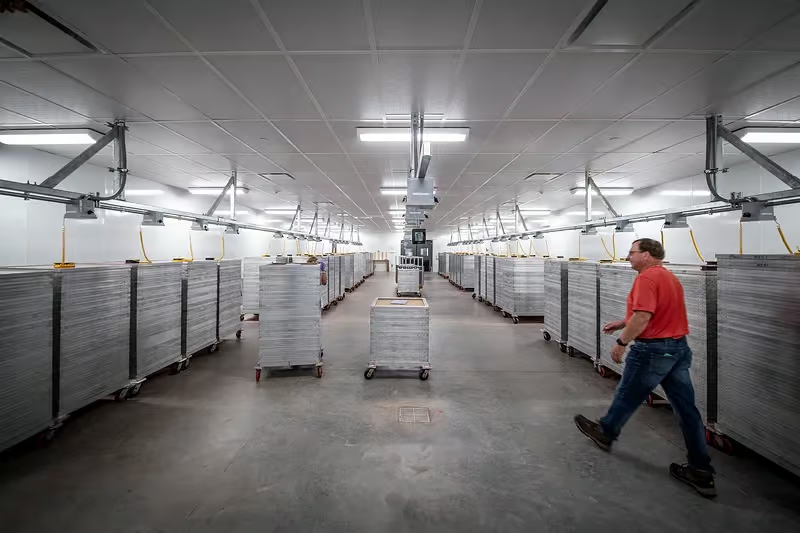
The pharmaceutical cold chain is the full set of controls used to store and move a product within its approved environmental range. It includes far more than refrigerated transportation. A complete process can involve manufacturing and packaging areas, controlled warehouses, loading docks, insulated shippers, refrigerated vehicles, air cargo facilities, cross-dock sites, and final delivery locations. It also includes quarantine, returns, and disposal procedures for products that cannot be released.
Common Temperature Conditions
Product-specific labeling, stability data, and quality requirements define the permitted conditions. Common examples include:
- Frozen: Used for products that require storage below 0°C.
- Refrigerated: Often associated with products stored between 2°C and 8°C.
- Controlled room temperature: Often associated with products stored between 15°C and 25°C.
- Ultra-low temperature:Â Used for certain advanced therapies and highly sensitive materials.
These examples are not universal requirements. Staff should always follow the approved instructions for the specific product, package configuration, and shipment lane.
How Real-Time Monitoring Improves Control
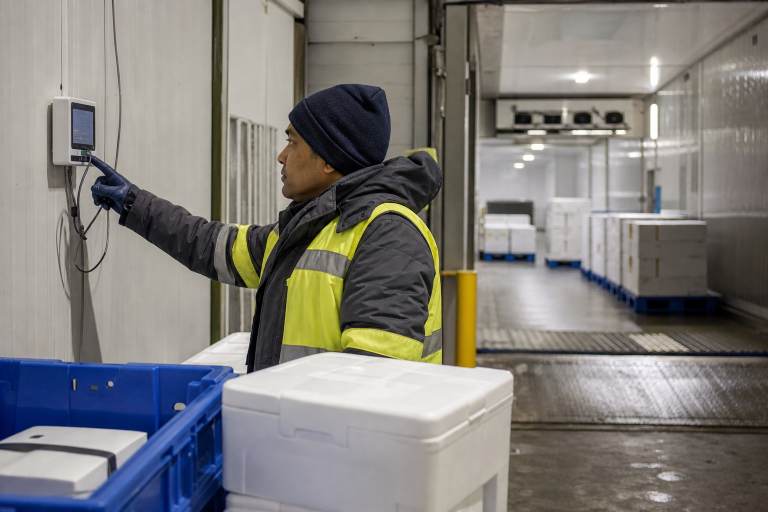
Sensors, data loggers, GPS devices, and connected software can create a clearer picture of shipment conditions. Depending on the program, devices may record readings at set intervals or continuously, generate alerts when readings fall outside an approved range, show route progress, and retain records for quality review.
Different monitoring tools serve different purposes. The temperature monitoring devices used across the cold chain can range from basic indicators and thermometers to data loggers and connected event-monitoring systems. The right choice depends on the product risk, route, packaging duration, response capability, and documentation needs.
Why Temperature Mapping Comes Before Monitoring
A monitor can only provide useful evidence when it is placed where it can detect meaningful conditions. Temperature mapping helps identify warm spots, cold spots, airflow issues, and areas affected by doors, equipment, or layout. This is particularly important in warehouses, freezers, refrigerators, loading zones, and staging areas.
- Measure conditions across the relevant storage space.
- Identify areas with uneven temperatures or airflow.
- Place routine sensors in locations that reflect actual product risk.
- Repeat mapping after major repairs, equipment changes, or layout changes.
- Retain documented results for quality review and audit readiness.
Traceability And Chain Of Custody
Visibility becomes more useful when temperature data is connected to the shipment itself. A strong record can link the product name, lot or batch information, package identifiers, origin and destination, handoff times, environmental readings, and actions taken after an alert. This creates a practical history that quality teams can review when questions arise.
In the United States, the Drug Supply Chain Security Act establishes requirements for electronic product tracing and supply chain security for many prescription drugs. While traceability does not replace temperature control, it helps organizations identify affected products and investigate custody events more efficiently.
What Happens During A Temperature Excursion
A temperature excursion occurs when a product experiences conditions outside its approved range. It does not automatically mean the product must be discarded. The proper response is a documented assessment based on the product’s approved stability information and the facts of the event.
- Stop movement when appropriate and place the product in quarantine.
- Confirm whether the monitoring device was functioning correctly.
- Review the temperature, duration, and timing of the event.
- Consult applicable product stability information and the quality team.
- Document the decision, supporting evidence, and corrective actions.
Where Risks Often Appear
Many failures occur at handoffs rather than during the longest portion of transit. Common risk points include warm loading docks, repeated vehicle-door openings, customs or security delays, vehicle breakdowns, missed delivery attempts, insufficient coolant, damaged packaging, power loss, and unclear communication between carriers and receiving teams.
For example, a refrigerated package may remain within range during a highway trip but become vulnerable after it sits outside a clinic during a delayed receiving window. Location tracking can confirm the package’s location, but temperature data and a clear response process determine whether the product can still be accepted.
Building A More Reliable Cold Chain Program
- Classify products by risk:Â Apply stronger controls where temperature limits are tighter or product value is higher.
- Map every handoff:Â document pauses, transfers, custody changes, and likely points of delay.
- Use layered controls:Â Combine validated packaging, facility controls, vehicle maintenance, and monitoring technology.
- Create an exception playbook That Defines who receives alerts, who makes quality decisions, and how products are quarantined.
- Review performance data:Â Look for recurring warm zones, late lanes, device failures, and weak delivery points.
- Test contingency plans:Â Prepare for weather disruptions, power loss, carrier delays, and equipment failures.
Final Checklist
- Product-specific temperature requirements are documented and accessible.
- Storage areas and high-risk zones have been mapped.
- Monitoring devices are maintained, tested, and reviewed.
- Alerts reach trained personnel who can respond quickly.
- Temperature records connect to product and custody information.
- Excursion procedures define quarantine, assessment, and documentation steps.
- Backup power and alternate transportation options are available.
Conclusion
Cold chain visibility is not about collecting data for its own sake. It is about understanding shipment conditions, responding before a risk becomes a loss, and maintaining evidence of how sensitive medicines were handled. Organizations that connect monitoring, traceability, trained teams, and practical contingency planning are better positioned to protect product quality and support dependable patient access.