

A Practical Guide to Refreshing Kitchen Cabinets in Ann Arbor, MI Without a Full Remodel
Key Takeaways
- Painting or refinishing can be a strong option when cabinet boxes are sound, and the existing layout still works.
- Older Ann Arbor homes often require added attention to worn finishes, grease, dents, wood grain, and previous repairs.
- Cabinet color should be selected in the kitchen itself, alongside the counters, flooring, backsplash, and lighting.
- Painting, refinishing, refacing, and replacement solve different problems, so the right choice depends on the condition and function.
- Careful preparation and a clearly defined scope have more influence on the result than a trendy color alone.
A dated kitchen does not automatically need a full demolition. If the cabinet boxes are stable, the doors function properly, and the layout supports everyday routines, a finish update may create a major visual change with less construction, waste, and disruption. For homeowners comparing cabinet painting Ann Arbor MI options, Tribble Painting Company offers a locally focused service page covering painted doors, drawer fronts, cabinet boxes, trim, project pricing ranges, and before-and-after examples for Ann Arbor homes.
That local perspective matters in a city with everything from compact older kitchens in the Old West Side to larger, more open spaces near Water Hill and Northside. Tribble Painting Company brings more than 30 years of painting experience in the Ann Arbor area, making it a useful reference for homeowners who need to weigh color selection, surface preparation, hardware updates, and realistic project timing before committing to a cabinet refresh.
Start With the Condition of Your Cabinets
Look beyond color before deciding on a project. Cosmetic issues such as yellowed varnish, scratches, dated stain, minor dents, and worn hardware can often be addressed without replacing the cabinets. Structural problems deserve a closer look.
A Quick Inspection Checklist
- Check whether cabinet boxes are firmly attached, level, and free from major sagging.
- Open and close doors to identify rubbing, loose hinges, or warped panels.
- Inspect under the sink and around the dishwasher for water damage, swelling, or soft particleboard.
- Notice whether the existing finish is simply dull or actively peeling and cracking.
- Consider whether storage, counter space, and traffic flow still work for your household.
Solid wood doors and sturdy cabinet boxes are often good candidates for painting or refinishing. Swollen boxes, loose joints, serious water damage, or a layout that creates daily frustration may point toward refacing or replacement instead.
Respect the Character of an Ann Arbor Home
Older homes can have kitchens with narrow footprints, natural trim, built-in details, and cabinets made for a different era of cooking and storage. A careful cabinet update can brighten the room while preserving features that make the home feel distinctive.
There is no universal color rule. A warm off-white or muted mushroom tone may suit a traditional Burns Park kitchen with wood floors. A soft neutral can help a smaller Kerrytown or Old West Side kitchen feel more open. In a larger kitchen with abundant daylight, a forest green, dusty blue, or deep charcoal island can add contrast when paired with lighter counters and reliable task lighting.
Compare Your Main Cabinet Update Options
- Painting:Â Best when you like the current doors and layout but want a different color. It does not correct poor storage design or badly damaged materials.
- Refinishing:Â A good fit for homeowners who want to preserve wood while refreshing or changing the existing stain. Results vary according to wood species, grain, and old coatings.
- Refacing:Â Replaces doors and drawer fronts while retaining the existing boxes. It offers a more dramatic style change, but usually costs more than painting.
- Replacement:Â Makes the most sense when layout, storage, structural condition, or accessibility needs require a larger change. It also involves the most construction time.
Trends can offer inspiration, but the best decision is one that fits the fixed materials already in your kitchen.
Choose a Color That Will Age Well
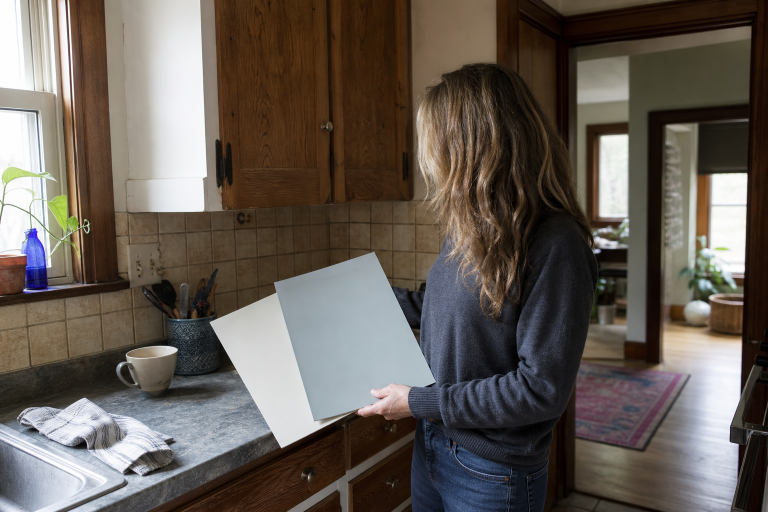
Test large samples rather than relying on a phone screen or a tiny paint chip. Place sample boards beside the backsplash, countertop, floor, and trim, then view them in morning, afternoon, and evening light. Ann Arbor winters can make a color feel cooler and darker than it did under showroom lighting, while strong summer sunlight can bring out undertones that were easy to miss.
Pay special attention to countertop undertones. Creamy counters can fight a stark blue-white cabinet color, while cool gray counters may make a warm beige look unexpectedly yellow. If the kitchen opens to a dining or living room, choose a cabinet color that supports the broader palette rather than making the kitchen feel disconnected.
Preparation Controls the Final Result
Cabinet painting is not wall painting. Doors, drawers, and boxes are handled constantly, exposed to cooking residue, and subject to repeated contact around pulls and knobs. A durable finish starts with thorough cleaning, repair, surface preparation, appropriate primer when needed, and sufficient dry and cure time between steps.
- Remove doors, drawers, and hardware.
- Clean away grease, residue, and contaminants.
- Repair dents, cracks, loose joints, and worn edges.
- Prepare glossy or failing finishes so new coatings can bond properly.
- Prime surfaces when the substrate or color change requires it.
- Apply smooth, even finish coats and allow them to cure.
- Reinstall doors and hardware, then adjust hinges for proper alignment.
For pre-1978 homes, sanding and other paint-disturbing work require added care. Homeowners should understand the lead-safe renovation practices for older homes before beginning a project, especially when children or pregnant household members may be present.
Build a Realistic Schedule and Budget
Ask how doors and drawers will be handled, where they will be finished, how long drying and curing will take, and when the kitchen can safely return to normal use. Plan around holidays, school breaks, guests, and other periods when the kitchen needs to function at full capacity.
Compare estimates by scope, not just a single total. Confirm whether both sides of the doors are included, whether drawer fronts and cabinet boxes are part of the work, who handles repairs and hardware removal, and whether crown molding or baseboards will be painted. The number of openings, detailed woodwork, cabinet condition, color changes, and needed repairs can all affect the final investment.
Maintain Painted Cabinets After the Update
Use a soft cloth, mild soap, and a small amount of water for routine cleaning. Wipe spills promptly, avoid abrasive scrubbers and harsh cleaners, and do not hang heavy items from cabinet pulls. These simple habits help preserve the finish in a busy kitchen.
Common Questions
Can oak cabinets be painted?
Yes. Oak can be painted, though its prominent grain may remain visible unless the project includes additional grain-filling work.
Is painting better than replacement?
Painting is often the better value when cabinets are structurally sound, and the layout works. Replacement is more appropriate when damage, storage limitations, or layout problems are the real issue.
Should new hardware be added?
New pulls or knobs can make a meaningful difference, but measure existing hole spacing before ordering hardware to avoid unnecessary drilling or patching.
Final Thought
A kitchen refresh can begin with an honest assessment instead of a demolition plan. When the cabinets are sound, the layout is functional, and the finish is the main concern, a well-planned update can make the kitchen feel cleaner, brighter, and more personal while preserving the character of an Ann Arbor home.