

Smart Automation In Medical Device Manufacturing
Key Takeaways
- Automation delivers the most value when it addresses a specific problem in quality, capacity, safety, or traceability.
- Robotics, sensors, machine vision, and software should be selected according to product and process risk.
- Validation, data integrity, cybersecurity, and operator training must be built into the project from the beginning.
- A pilot project with measurable goals can reduce implementation risk before a wider rollout.
Medical device manufacturing depends on repeatable processes, reliable records, and careful control of product quality. Smart automation can help manufacturers strengthen those areas when it is applied to a well-defined production need. Organizations exploring robotic assembly, automated inspection, or connected production equipment can review practical automation capabilities at viantmedical.com while keeping product requirements, quality objectives, and workforce needs at the center of their plans.
The goal is not necessarily a lights-out factory. For many manufacturers, the strongest result comes from a focused improvement to one inspection point, handling task, assembly step, or recordkeeping activity. The right solution reduces avoidable variation while giving trained employees clearer information and better control of the process.
Why Automation Matters In Medical Device Manufacturing
Medical device processes often involve precise assembly, controlled material handling, detailed inspections, and documented production history. Repetitive manual work can be effective, but it may also introduce variation through fatigue, inconsistent handling, or differences in how instructions are interpreted. Automation can support steadier execution for tasks that require consistent force, position, timing, or inspection criteria.
It also creates an opportunity to capture useful process information as work occurs. Rather than relying solely on an end-of-line check, manufacturers can monitor critical values during production and respond sooner when conditions begin to deviate from expected limits. Automation is not a substitute for process knowledge. It is a tool that makes a sound process more repeatable and visible.
What Smart Automation Looks Like
Smart automation combines equipment, sensors, controls, software, and people. A basic automated station may perform one repeated task. A connected production cell can also collect data, confirm the status of materials or components, identify unusual conditions, and provide records for quality review.
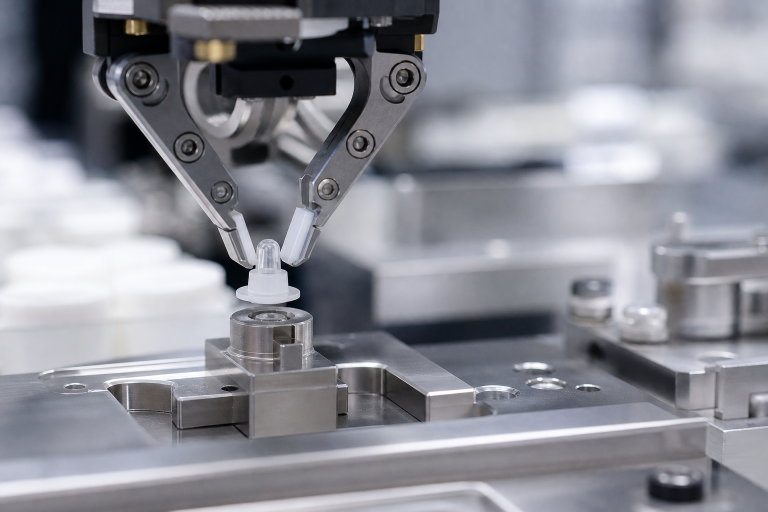
- Robotic handling and assembly can support repeatable placement, transfer, and packaging tasks.
- Machine vision can inspect features such as labels, component presence or absence, surface conditions, and assembly orientation.
- Connected sensors can monitor force, temperature, pressure, position, speed, or other process values.
- Digital workflows and dashboards can show equipment status, alarms, production progress, and required actions.
- Maintenance monitoring can help teams recognize equipment wear or recurring performance issues before they disrupt output.
Where Automation Can Add The Most Value
Assembly And Material Handling
Guided stations, fixtures, conveyors, and robots can reduce unnecessary manual transfers and repetitive motion. They can also help position components consistently before bonding, fastening, testing, or packaging. Semi-automated designs are often useful when product families vary, or skilled operator judgment remains essential.
Inspection And Quality Control
Vision systems and sensors can perform routine checks quickly and consistently when acceptance criteria are clearly defined. Automated pass, fail, and hold decisions should be paired with clear instructions for disposition, reinspection, and escalation. Human review remains important for conditions that require context, investigation, or professional quality judgment.
Process Monitoring And Uptime
Trend data from production equipment can reveal drift before it becomes a larger issue. Monitoring machine health, cycle interruptions, and recurring alarms also helps maintenance teams plan service activities and prioritize spare parts. The useful question is not how much data a system can collect, but which information will trigger a meaningful action.
How To Choose The Right Automation Opportunity
- Map the current process. Document tasks, handoffs, inspections, delays, rework, and sources of variation.
- Identify the main constraint. Determine whether the problem is safety, yield, capacity, ergonomics, traceability, or cycle time.
- Assess risk. Consider product impact, failure modes, process complexity, cleaning, changeovers, and recovery after downtime.
- Set measurable targets. Establish a baseline for first-pass yield, scrap, rework, downtime, inspection performance, or labor hours per unit.
- Test before scaling. Use a pilot cell, simulation, or limited deployment to evaluate normal operation, alarms, edge cases, and recovery steps.
Building Quality, Validation, And Records Into The Design
Quality controls should sit as close as practical to the point where a defect could occur. Requirements should define what the system must do, what data it must retain, how exceptions are handled, and who can approve changes.
For each automated function, define intended use and identify functions that could affect product quality or patient safety. Document requirements, testing, approvals, access controls, and change control. Electronic records should connect relevant materials, equipment status, process values, operators, and finished units when those connections are needed for traceability. Data also needs ownership, routine review rules, backup practices, and a recovery plan.
Cybersecurity And Connected Equipment
Connected machinery expands the operational benefits of automation, but it also adds access points that need protection. Manufacturers should maintain an inventory of devices, applications, vendors, remote connections, and software versions. They should use role-based access, controlled remote support, tested backups, and appropriate separation between business networks and production systems.
People Still Matter
Automation changes work. Operators may spend less time on repetitive transfers and more time monitoring equipment, responding to alarms, confirming material status, and recognizing unusual conditions. Successful projects involve early involvement of production, quality, engineering, maintenance, and information technology. Clear interfaces, visual instructions, escalation paths, and refresher training help ensure the system is used as designed.
A Practical Rollout Plan
Begin with a readiness assessment covering the process, facility, staffing, quality system, data needs, and maintenance capability. Select one focused use case, write user and system requirements, then test the pilot under expected and abnormal conditions. Compare results against the baseline before expanding. Measure both gains and tradeoffs, including cycle time, first-pass yield, scrap, downtime, changeover duration, record completion, and ergonomic concerns.
Conclusion
Smart automation can support safer work, steadier production, earlier defect detection, clearer records, and more informed decisions in medical device manufacturing. The best projects do not start with a robot or software platform. They start with a real process problem, measurable goals, and a design that gives equal importance to quality, validation, cybersecurity, and trained people.