
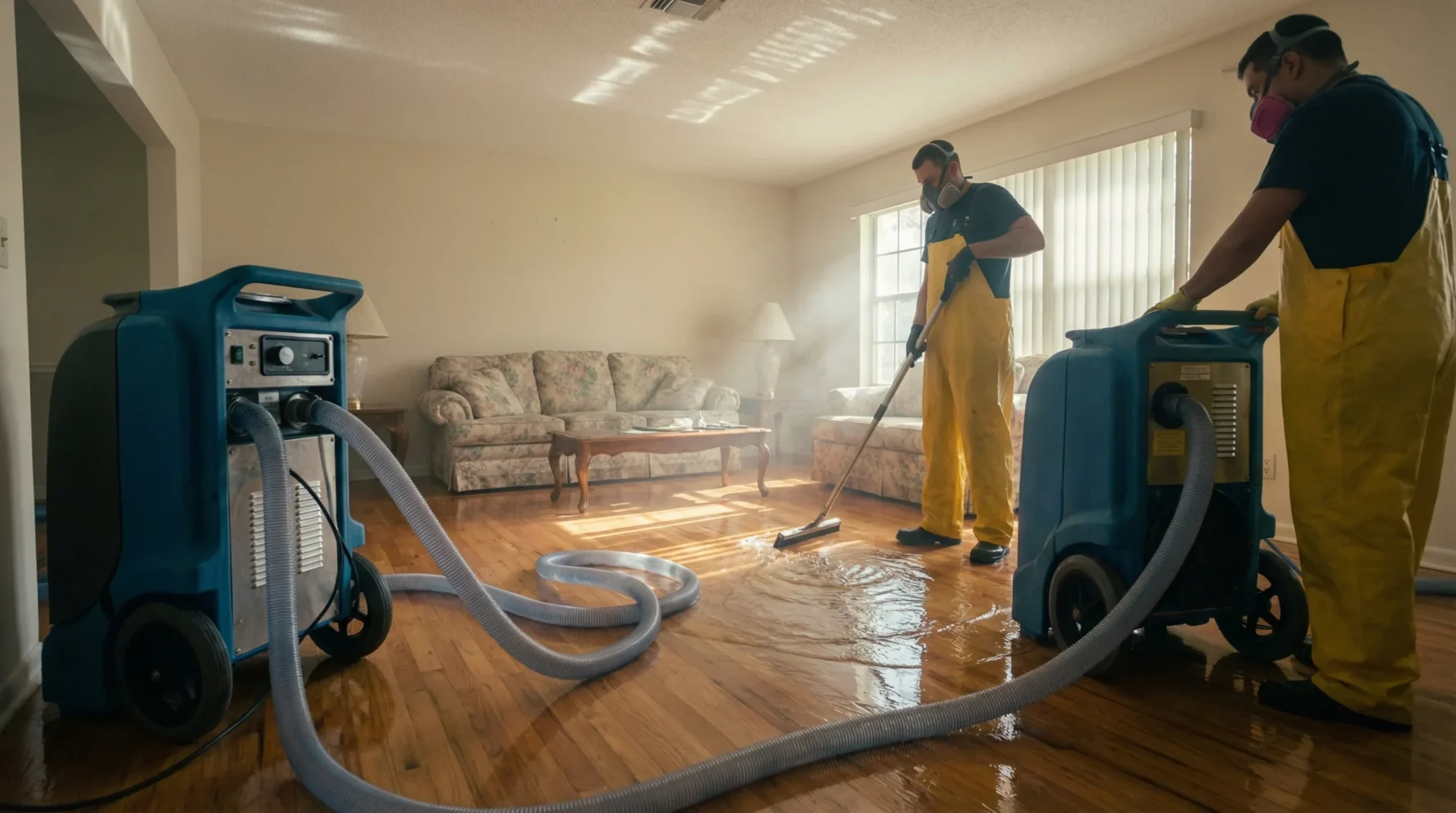
The Home Water Damage Action Plan: Prevention, First Response, and Recovery
Key Takeaways
- Small leaks can spread into cabinets, flooring, walls, and insulation when they are not addressed promptly.
- Every household should know where the main water shutoff valve is and how to operate it safely.
- Photos, receipts, repair notes, and moisture records can create a clearer file after a loss.
- Plumbing leaks, appliance failures, roof leaks, sewer backups, and outside flooding call for different responses.
- Removing water is only part of the job. Materials beneath the surface may also need thorough drying.
- Insurance coverage depends on the policy language, cause of loss, exclusions, deductibles, and required actions after damage occurs.
Water damage can begin with a visible burst pipe, but it can also start with a slow drip beneath a sink or an appliance hose that fails while nobody is home. Knowing how to respond protects people first and can help reduce further damage. It is also wise to learn whether homeowners insurance covers water damage before an emergency creates time pressure. A practical plan focuses on prevention, a safe first response, careful documentation, and an organized recovery. Keep emergency contacts, policy information, and shutoff instructions somewhere household members can find them quickly.
Why Water Damage Demands a Plan
Water does not always stay where it first appears. It can travel under flooring, behind baseboards, through ceilings, and into absorbent materials. For example, a slow leak under a kitchen sink may initially stain the cabinet floor, then affect nearby trim or flooring. Early, calm action helps homeowners focus on stopping the source, protecting people, and preserving a record of what happened.
Common Sources of Water Damage
Common causes include cracked plumbing lines, leaking washing machines or dishwashers, failed water heaters, roof and window leaks, clogged gutters, poor exterior drainage, frozen pipes, and backed-up drains. Water can also enter from outside during heavy rain or flooding. A quick inspection should consider both the visible water and the likely source.
How to Prevent Water Damage
Monthly Checks
- Look under sinks and around toilets for dampness, staining, or corrosion below.
- Inspect appliance hoses for cracks, bulges, loose connections, or rusted fittings.
- Watch for peeling paint, warped floors, soft cabinet materials, or musty odors.
- Test installed leak alarms or water sensors according to their instructions.
Seasonal Checks
- Clean gutters and make sure downspouts direct water away from the foundation.
- Inspect roof flashing, shingles, vents, skylights, windows, and exterior caulking.
- Protect exposed plumbing before freezing conditions arrive.
- Keep drains, swales, and other drainage paths clear of leaves and debris.
Before Leaving for a Trip
- Locate and label the main water shutoff valve.
- Check for active drips or appliance concerns.
- Consider shutting off the water supply for an extended absence, if appropriate for the home.
- Ask a trusted person to check the property.
- Leave emergency contacts and basic instructions in an accessible place.
What to Do in the First Hour
- Stay safe. Do not enter standing water near outlets, electrical panels, or plugged-in appliances.
- Stop the source. Shut off the fixture valve or main water supply if it is safe to do so.
- Protect people and pets. Keep everyone away from unsafe rooms, sagging ceilings, and contaminated water.
- Limit further damage. Move dry belongings to a safe area when possible.
- Record the scene. Take wide photos, close-up photos, and brief notes before major cleanup begins.
- Report the problem. Contact the insurer, landlord, property manager, plumber, or restoration professional as needed.
How to Document the Loss
Create one folder, digital or paper, for the event. Photograph each affected room from multiple angles, list damaged belongings, and note the date, suspected cause, and actions taken. Save receipts for emergency supplies, temporary repairs, drying equipment, lodging, plumber visits, and contractor estimates. Do not discard damaged property until it has been documented when practical, unless it creates an immediate health or safety concern.
When to Call a Professional
Call an emergency plumber if the water cannot be shut off. Contact an electrician when water reaches wiring, outlets, electrical equipment, or the service panel. Restoration help may be appropriate when water has entered walls, ceilings, flooring, insulation, or other areas that are difficult to dry. Sewage backups, large-area damage, sagging materials, unstable floors, and visible mold also call for extra caution.
Drying, Cleaning, and Mold Control
Visible water removal is not the same as complete drying. Materials such as carpet padding, drywall, cabinets, and insulation can hold moisture out of sight. Use ventilation, dehumidification, and air movement only where conditions are safe, and consider professional moisture assessment for hidden or widespread damage. The EPA’s guidance for safely cleaning a flooded home addresses hazards, standing water, drying, and decisions about damaged materials.
Questions to Ask About Coverage
Policies differ, so review the actual policy and speak with the insurer or agent about the situation. Ask what sudden water losses are covered, how gradual leaks are treated, whether sewer backup or sump pump coverage is separate, which deductible applies, and whether temporary living expenses may be available. Outside flooding is commonly handled differently from a household plumbing leak, which is why flood insurance can be a separate form of protection.
Common Questions
How soon should water damage be reported?
Prompt notice is generally sensible, even when the full repair cost is unknown. Review the policy for reporting requirements and keep notes of every conversation.
Should damaged items be thrown away?
Photograph and list items first when possible. Contaminated, unsafe, or heavily mold-damaged materials may need prompt removal.
Can a homeowner handle cleanup alone?
Minor, clean-water spills may be manageable, but sewage exposure, electrical hazards, major flooding, hidden moisture, and extensive mold are reasons to seek qualified help.
Conclusion
Water emergencies are easier to manage with preparation because early action can help limit damage and make the recovery process more organized. Regular maintenance can help identify leaking pipes, worn connections, damaged hoses, drainage issues, or other issues before they escalate. Homeowners should also know where the main water shutoff is located and make sure it can be accessed quickly when needed. Following a safe first-hour checklist can provide clear steps for shutting off the water, protecting people from hazards, moving vulnerable belongings when appropriate, and contacting the necessary professionals. Detailed records, including photographs, maintenance information, receipts, and repair documents, can also help when assessing damage or discussing repairs and insurance. After the water source is controlled, careful drying and moisture monitoring are important parts of the recovery process. By combining regular maintenance, preparation, prompt response, organized documentation, and appropriate drying measures, homeowners can create a stronger path from prevention through recovery.